
The BIG day draws near: On the auspicious date of 10.10.2008, I’m marrying Ning Ma. We’re holding the wedding in her hometown of Tianjin, China. Unfortunately I realize that means many of my friends and family won’t be able to attend. That’s why we’ve set up this site, www.gotoofareast.com/wedding, which links through to photos and a wedding video (we’ve got baby pics, folks!). Hope you enjoy.
I know what you all want to know next: Where are you going on your honeymoon? The answer: Bali, Indonesia! We’ve found a great little surfer resort named Ellie’s (www.ellies-bali.com) near the Nusa Dua beach. I’m going to be taking a two-week break from Go Too Far East. But when we get back, I’ll be posting some wedding/beach pictures.
This question is even more interesting because of who asked it. Jenny is kind of the opposite of me: a Chinese person living and working in Dallas. So she’s got plenty of first-hand experience with culture. Rather than letting her counter response get buried in the comments section, I wanted to share it here with everyone. Introducing Go Too Far East guest contributor Jenny Xia:
The answer to tourist’s truth
Tim, you just keep enlightening us with your perceptive observation and eloquence. This particular post addressing my “challenging” question was again insightful – in expected and unexpected ways. I think it’s only fitting that I reciprocate with an equally thought-out post. Before I elaborate, though, I wanted to say that I was sorry to hear about your wedding picture. Well, that’s third-world-country law and order for you. After all, it’s a country where anything can be faked – designer clothes, prescriptions, receipts … you name it.
So, let’s go back to my question. When I asked it, I was hoping that you wouldn’t give me a tourist’s version of truth – that you’re staying in China for the exotica, such as ancient architecture, Chinese calligraphy, imperial garment, eccentric foods and whatnot – though it may have been the initial appeal. And, you didn’t. Your statement of “I can’t say that culture is the reason I’m here anymore” was expected, as I did sense your evolving understanding of China by following your blog. The youthful enthusiasm at the beginning of your journey seems to have evolved into resilience and, as you said, a sense of adventure.
What’s unexpected were all the other revelations. Thank you for giving a name to the part of culture that’s called “values.” Before I get to that, I wondered if ideology is part of values. Allow me to indulge in a travel story. I visited Budapest five years ago, before Hungary joined the EU. The similarities between people there and (mainland) Chinese were aplenty and surprisingly palpable. It was the likeness in the head, programmed by ideology, political tumult (the founding and failing of socialism) and the socio-economic reforms that ensued. The country’s aspiration for an EU membership was as fervent as China’s desire to join the WTO. Underneath it all are a nation’s intent to make up for the lost years and restive aspiration for changes.
Ok, move on to the values you spoke of. I couldn’t put my finger on it before, when asked why I enjoyed America. Beyond the ostensible (conveniences and clean air) and the superficial (art, fashion and consumerism), that is. I’d just say that I appreciate civility when people show good manners in public. I appreciate kindness when a fellow passenger on a plane helps me reach the overhead bin. I appreciate decency when drivers involved in a car wreck voluntarily exchange information. I appreciate trust when I shop, knowing that retailers aren’t out there to con me in spite of savvy marketing. Most of all, I appreciate my independence – a missing element from the Confucian culture I was born into. Many adult children in China still live with their parents or in-laws, mooching off the old folks and making communal decisions. I find it preposterous. Despite practical reasons (e.g. expensive housing in big cities), I think it’s a personal choice of convenience and complacence. Now, I’m not saying that I buy everything in American culture. Frankly, I’m rather cynic about the feel-good mentality, which seems to do little good but help people develop drug/alcohol dependence, find blames and shun personal responsibility.
My favorite words in your post are “we’re more about our choices than our culture.” Indeed. It trivializes personal decisions when we attribute everything to culture. And hopefully, by making the right (at times bold) choices, we can challenge and change obsolete values. I think the greatest gain from international experiences is being exposed to a different perspective so that we become gradually aware of the differences between cultures, evaluate them and then determine what to be aborted or absorbed. We just might turn out wiser. You know, Mao has a quote that says it best. I know you’re interested in historic figures, so I’m inserting his quote here (for kicks): “古为今用,洋为中用,百花齐放,推陈出新.”
###
That quote from Mao, translated to English, goes something like this:
“The ancient things are for modern people’s use, the foreign things are for Chinese people’s use. Let a hundred flowers blossom. Get rid of the stale and bring forth the fresh.”
This is a cross-post with an article I recently contributed to allaboutadvocacy.com, a blog set up by my company, Weber Shandwick, that explores the concept of advocacy in communication today.
The numbers are in. Buoyed by a domestic viewing audience of 842 million, who tuned into China’s “show of the century” opening ceremony, and the trans-Pacific popularity U.S. swimmer Michael Phelps—the Beijing Olympics have set a new benchmark for viewership.
Nielson has announced a total global TV audience of 4.4 billion viewers representing two-thirds of the world’s population.
Watching TV can hardly be called an action, but can it be a form of advocacy? Yes. Vegging out in front of the TV may not pack the punch of joining in a protest. But it is people’s precious evening hours at home that they’re spending. Sitting on the sofa and tuning in speaks volumes.
In addition is the mind-numbing number of people who “tuned in” to the Games on the Internet. In China alone, 102 million people watched the Olympics online. And the Web site of NBC, which had exclusive broadcast rights in the U.S., recorded 30 times more video views than that in Athens four years earlier.
Whether the footage presented China in a positive or negative light is of a lesser importance. We all got a prime-time presentation of brand Beijing courtesy of major TV networks around the globe. So long after discussion about the opening ceremony’s artistic direction have ceased, athletes names have faded from the headlines and the exact medal count becomes muddled in our minds, it will be China’s expanded share-of-voice that lives on in our travel plans, business ventures, movie selection and a host of other personal decisions.
This goes a long way toward building the soft power that any rising brand (or country brand) needs to catch on with consumers. For China, that means college students selecting a minor in Mandarin, teenagers wearing T-shirts with Chinese words, and kids asking their moms to sign them up for Kung Fu lessons.
Call it the global “China Cult”—advocates who are attracted to China’s cultural characteristics. Japan has such a following in Manga and sushi bars—South Korea has such a following in Taekwondo and pop star Rain. It’s not too much of a stretch to trace the trendiness of these two cultures to the 1964 Olympics in Tokyo and the 1988 Olympics in Seoul. Now it’s Beijing’s turn.
If Neilson ratings can be viewed as a sign of the times, future marketers may well look back on 2008 as the year China became cool. Watch out for a lot more of brand China on your TV.
Go Too Far East reader Pipsqueak recently asked a good and challenging question of me:
You’ve said on multiple occasions that you like the Chinese culture, that you came to China because of your interest in its culture. What is “Chinese culture” to you? What elements in this culture that you like so much?
I am going to answer this question here. And I have to tell you the truth as I write this–I have no idea what I’m going to say.
“Chinese culture” — The meaning of this term has evolved and taken on different meanings throughout my journey. I would say that my understanding of what constitutes culture has really changed a lot. You know we learn about these things through comparison. That’s why they put you in “Comparative Government” class in college–you learn about American government and foreign governments by comparing their similarities and differences. I’ve learned a lot about American and Chinese culture the same way.
I used to think that culture was architecture, art, fashion, style, cuisine and language–all the things beside ethnicity that make you Chinese or American … the non-hereditary elements, the learned elements. Like communication styles. But then I started to see that there’s more behind those cross-cultural mix ups than different communication styles. We really have different values. That’s part of culture too, I said to myself.
This is when my own culture began to assert itself. I can change my shirt, I can change my cuisine, I can even change what’s playing on my iPod. That’s like the desktop wallpaper of culture. You can “Asian-ify” your desktop with a bamboo background, or you can put an Apple logo on your Windows desktop. But in the end it’s still a PC. And Chinese people can speak English, just like American people can speak Chinese. But under the hood, we’re all who we are. Our values–the things we think are right and wrong. When I felt my values threatened–like my surroundings, which were built upon the values of an alien culture, were requiring “when in Rome” of me–I went on the defensive.
Case in point: my former landlord. One day, the apartment flooded and ruined my new wedding picture (a big expensive one). That’s the one thing that you can’t have ruined. When I confronted him about it, he denied that he should have to pay. This turned into a protracted contractual conflict. After a weekend of arguing and even getting a third party involved, he finally gave in. I moved out, and he paid me for the picture. Why couldn’t he have just accepted a compromise at the beginning? Because that’s how things are settled here: unreasonable offers, unreasonable counteroffers, more back and forth, then a compromise. Did he ever consider just doing the “right thing” at the beginning? No. Because for him, the “right thing” was probably to make money for his wife and kid whether that means treating your tenants respectfully or not.
Okay, maybe you won’t think this example shows a very big culture difference–just a small conflict. What about the time I saw a man wrestling a woman to the street. There were no less that six cops in earshot directing traffic not to mention a crowd watching. No one said a thing. I asked the cops to break it up, and they didn’t. They walked the other direction. Finally, I had to go break it up. Were the cops wrong? That’s my point of view. Their point of view: marital dispute, better not get in the way.
Such situations made me realize what my values really are. They made me stubborn. They made me judgemental. And they put a bad taste in my mouth toward the decorative elements of culture–the cuisine, dress, architecture, etc. And a lot of people stay right there, and “Chinese” or “American” become bad words. And you can live for a long time like that on the edge of an angry outburst walking down the street everyday hating all the people around you.
I think I’m finally starting to see things a different way. I think we all have values, but they’re different from person to person more than they are from country to country. A lot of these things are situational (higher populated places tend to push more for instance). But the deep down value difference–I think it tends to be much more personal. I’m not trying to downplay the importance of culture. But I do want to put things in perspective. We’re more about our choices than our culture.
So what about values? Here’s something I learned from a really rad Chinese scholar named Lin Yutang. He was addressing the question that many religious Westerners ask of atheist Chinese: How can you have morals without believing in God? Chinese culture, which unlike modern Western culture, is not built on Christianity. In fact, for thousands of years Chinese have been mildly atheistic as even Taoism and Buddhism have a much different concept of God than the main monotheistic faiths. His answer was simple: you should treat other people the right way simply because you’re human, and that’s the way humans are supposed to act. Lin answered an ethical/philosophical question with a raw, worldly answer.
That illustrates a Western-Chinese culture difference, and it also starts to answer Pipsqueak’s second question, “What elements in this culture that you like so much?” I really appreciate being exposed to a way of looking at the world that is at times totally alien to me. Chinese people’s way of looking at things, I think, are often very practical (sometimes too practical). Sometimes, they approach things with a totally different logic. And every once in a while, as frustrating as this can be, I learn something valuable from this new, “Eastern” perspective.
FYI: I still don’t buy all the Traditional Chinese Medicine stuff–tastes bad.
But I can’t say that culture is the reason I’m here anymore. It’s not. And I don’t think that culture alone would ever be a good enough reason to make me go anywhere for longer than two weeks. I am here because I am young and I never lived in a big city before, and I enjoy the dynamism of a fast-developing country. I’ve heard many people compare the breakneck (even dog eat dog) atmosphere here to that of America during the industrial revolution and Western expansion. They call it “the wild, wild East.” Maybe I’m getting in touch with my Americanism? For all the pitfalls of living in the Third World, it does entail a sense of adventure. And many times, that adventure takes the form of culture shock, as I guess you can tell.
We were taught this jazz in Intercultural Studies 101: Western culture is individualistic; Eastern culture is collectivist. I used to buy it. And why wouldn’t I have? It’s simple, profound-sounding and seemingly makes sense.
…as are so many things.
Here’s a general rule to guide your search for truth (free advice courtesy of Go Too Far East): Being simple doesn’t make something true. In fact, the truth is often so complicated that it resists being systematized by our limited human understanding. The truth is that the world is a complicated place; facts are multifaceted.
So when I got this chain e-mail (for the second time) illustrating in very simple terms the supposed difference between Eastern and Western culture, I was skeptical. Note to reader: I wasn’t skeptical the first time I received this e-mail a year ago, when I had just moved to China.
Here’s one illustration from the afore mentioned e-mail. I can accept this—in a country with 1.3 billion people and an inefficient, corrupt bureaucracy, it’s every man, woman and child for him or herself. This applies to subways, banks and McDonald’s.
And here’s another one that appears to illustrate a collectivist culture:
Now I depart from my college professors. I do not find Chinese to be a collectivist culture. Rather, in my experience, I have witnessed Chinese behave in drastically more individualistic patterns than Westerners.
For example, is cutting in line individualistic or collectivist?
In China, you see a lot of really dirty apartment buildings. But on the inside, people have invested a lot of money into remodeling their own personal castles. It’s the outside of the building—littered with tightly tied, trashed filled plastic bags—that is neglected because it belongs to no one. There’s little sense of the public sphere here.
Another example is the way people drive in China. Few pay attention to traffic signals, causing almost every intersection to turn into a knot of people, bicycles and cars. A greater awareness of the public sphere would inform walkers, riders and drivers that taking turns would benefit all.
And it effects me, too … I’ve been living here a year and half, and I have started to use a little shoulder to get my Big Mac.
The area in which I have observed Chinese people act in a collectivist way is within the house. The family unit is extremely strong, and I know people who make incredible sacrifices for their kin. The question is, would they make such a sacrifice (or yield) for a stranger. In many cases, I think no.
I’m not criticizing anyone. I’m merely explaining why I think these two words–“collectivist” and “individualistic”–are too simple to describe the differences between East and West.
Now check this one out. It’s supposed to illustrate the Chinese elderly people like grandchildren more than pet dogs. If you believe that, just visit my apartment. Dogs outnumber grandchildren 10 to 1.
Some of the illustrations are very accurate, however. In many cases, though, I feel it has more to do with lifestyle than culture. For example, Chinese shower at night while many Westerners shower in the morning, right? But check it out, without central heat and air, you’d shower at night too (I do now).
Another accurate one: Cars for well-to-do Chinese and bikes for eco/health-conscious Westerners
The grass is always greener on the other side: Trendy Asian fusion restaurants in the West; trendy Western cuisine in China.
And finally, skin tone. Chinese prefer fair-complected skin. Westerners? A nice tan.
If you’ve attended any events of the Beijing Olympics, you’ve heard it: “Jiayou!” Maybe you can even hear it on TV: throngs of red flag-waving fans chanting the two-syllable cheer with one voice whenever China scores, slam dunks, pings or pongs.
Now, with China winning more gold medals than ever before, Chinese certainly have a lot to shout jiayou for, leaving foreign fans and sports media wondering what this jah-yo, jah-yo business is all about.
“Jiayou,” as it is rendered in English according the most widely used Romanization system, conceals a very picturesque meaning. In Chinese, “Jia” (加) means “to add”. “You” (油) means “oil.”
So how do we translate jiayou into English? Should we even try?
You’ll usually see it conveyed in English media as “…the Chinese fans shouted ‘go, go’” or “come on!” Seems easy enough. My personal favorite was, “pump it up,” which can be used in a cheering context and also alludes to the term’s gas station imagery.
But a recent article in the Beijing News made me think differently. An article in the August 22 edition entitled, “How to say ‘jiayou’ in English,” explains how translators run into problems when using “go, go” or “come on,” which don’t cover the full extent of jiayou’s meaning. For example, when China mourned the victims of the devastating earthquake earlier this year, the crowds gathered for a commemoration at Tiananmen Square burst into shouts of “Zhongguo (China) jiayou!” and “Wenchuan (the location of the epicenter) jiayou!” How can we translate the voice of a solemn vigil as “pump it up?”
I am proposing that we English speakers do the only thing to do when one’s language lacks an appropriate translation: import. I’ve been told that this has already begun taking place during the Beijing Olympics, with American fans shouting “U-S-A jiayou!” In fact, jiayou has already made it into one English (sort of) dictionary: the Urban Dictionary (http:www.urbandictionary.com), where it is listed under A for “add oil.”
What’s the harm of borrowing a word from Mandarin? Chinese have certainly picked up plenty from English. Just take the Chinese word for Coca-Cola, “Kekou Kele,” or sofa, “shafa.” And it’s no secret that “baibai” is now a perfectly acceptable Chinese translation for “bye bye.”
Think about the range of expression this word would add to the English language. Jiayou is akin to shouts of “Viva la…”, which express solidarity. Except jiayou doesn’t need to be attached to the name of any particular leader or cause. It simply expresses a surge of support, all in a compact six-letter package. You’re favorite team is about to win the Super Bowl, Superman is recovering from a bad case of kryptonite or even you’re consoling someone over a loss: Jiayou!
The only bad thing about this buzz word is that it doesn’t reflect Beijing’s commitment to hold a “green” Olympics. “Add oil!” sounds more like an anthem for U.S. President George Bush’ energy policy (and foreign policy).
Maybe Chinese should start using a more environmentally friendly phrase like the Mandarin word for recharging batteries, “chongdian.” I would like to know I’m shouting “U-S-A add electricity!” rather than “U-S-A add oil!” But jiayou has got a certain ring to it, which etymologists will tell you is ultimately the deciding factor in whether or not a loan word sticks. Webster’s: add “jiayou.”
You gotta “jiayou” for the home team … even when it’s not your home. Though at this particular match (Brazil vs. Norway in girl’s soccer), there was no home team. But Chinese tend to go for the underdog. I overheard one Chinese fan say, upon Norway losing the ball, “they have wasted the emotion of the Chinese people” (浪费中国人民的感情).
From the audiences’ point of view.
That’s Ning and I with her parents. Ning’s father, the consumate sports fan, celebrated his birthday on the day of the Opening Ceremony. Except for the Olympic matches we went to, I understand that he hasn’t taken his eye off the TV since. And I hear from Ning’s mom he’s taken to sleeping on the couch where he falls asleep watching the Olympics.
In the background, the basketball stadium where the U.S. dream team played China’s b-ball hero, Yao Ming. Chinese basketball fans, devoted to watching the NBA, didn’t know who to cheer for. In fact, when Kobe Bryant came out during the Opening Ceremony, he drew home-team levels of applause. Over here, basketball is the new ping pong.
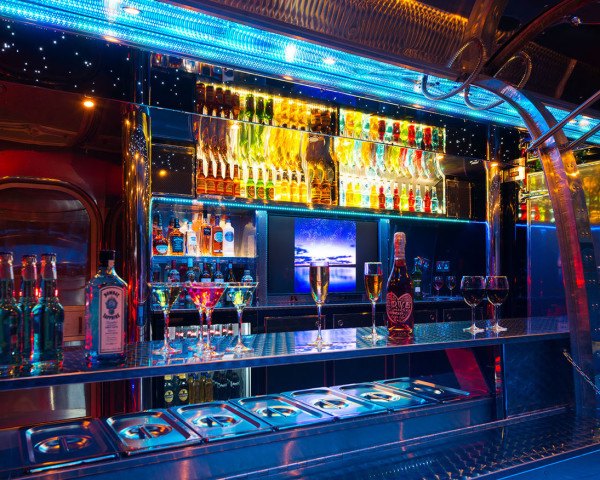
There’s been a lot of weird things popping up all over the city during the Games. For example, this “Hippie Bus” parked outside my apartment. Don’t quite know what to make of this.
Finally, Ning. She’s been working for Olympics sponsor McDonald’s as a producer. I lent her my black cap to give her more of a Michael Moore feel. I think it works. Here she is filming cultural exchange on the Great Wall.
The city is aglow with Olympics fever … people are taking two-hour lunch breaks and spending the whole time at their office front desk to watch the Games, watching the Games on the Internet at work, and rushing home to watch the Games after work.
Every once a while we get a ticket to go see an Olympic match up close and personal. Check out these images from badminton, sand volleyball and a surprise run in with Carl Louis!
Ning is working for Olympic sponsor McDonald’s as a production assistant. In the course of filming some documentary about how much the athletes love scarfing down Big Macs (yes, it’s true), she met U.S. Olympian Carl Louis!
Who knew that sand volleyball had cheerleaders? They don’t broadcast this part. A cross-cultural troupe of bikini-clad cheerleaders … as if the crowd can’t handle a few non-bikini moments between matches.
Walked in just in time to see Chinese badminton star Lin Dan (or “Super Dan”) cream his opponent. The best part of the Olympics for me is watching Chinese people go totally mental when the home team wins.
By now, the opening ceremony of the Beijing 2008 Olympics has been broadcast all around the world. At the risk of being biased in favor of my current residence, I have to say that this was the best opening ceremony I’ve ever seen.
Check out this little video about my experience trekking around Beijing on the day of the ceremony. The Chinese people took to the streets in full force — and I even caught sight of a little cross-cultural revelry … all in the spirit of the Games.
One of my recent post, “How to hate the government and love the people,” really generated a lot of buzz. (To my chagrin, that probably had more to do with the controversial photo captions than my article.)
Pipsquek pointed out that the greatest impediment to separating politics and people in one’s mind is stereotypes:
The real issue is that every country is associated with a stereotype, a perception in media. Sometimes it’s a flattering one, other times, discomforting. But the perception often prompts a snap judgment of who we are.
Joel commented that China seems to not separate politics and people—for example, taking leader’s comments to be representative of people’s view:
Distinguishing people from government is an American specialty - we do it naturally. But for Mainlanders, the ‘face’ of the people is inextricably connected to the face of the government. That’s why people freak out (and mis-translate/paraphrase pundits like Cafferty) when foreigners publicly criticize Chinese government policy - they are more likely to feel it as a national/cultural/racial offense, with little important distinction between the three when face is involved.
I agree and disagree. On one had I think Joel is right that in a country like China where more than 90 percent of your population belongs to one ethnic group, it’s hard to separate the nation from the ethnicity (which coincidently is why they’ll never give me a Chinese green card).
However, I really, really, really don’t think that Americans just make this politics-people split “naturally” as Joel says. Yes, on home soil, Americans know that what happens in Washington D.C. doesn’t necessarily represent the American people’s points of view. But do we extend the same courtesy overseas?
I don’t think so. I think we maybe subconsciously sometimes lump China with Chairman Mao and even Stalin for that matter. I’m not asserting that Americans don’t like Chinese people—that’s not the case. There are many Chinese people who are Americans. I just mean that it’s very easy for us (including “I”), when seeing a huge red flag or hearing people addressed as comrade or seeing a security guard, to think—bad guy. Enemy. Commie.
In reality, Chinese people like their red flag because red was a lucky color in China long before the communist revolution, the word “comrade” today most often refers to members of the Chinese gay community, and the security detail you see everywhere are merely part-time teenage door hops.
Another of Joel’s comments is interesting, and I want to agree with it at one level, but I’m not sure:
[Chinese] people freak out (and mis-translate/paraphrase pundits like Cafferty) when foreigners publicly criticize Chinese government policy - they are more likely to feel it as a national/cultural/racial offense.
You see, whenever someone make a speech and says anything critical about China, the Foreign Ministry has three token responses:
• It is not right to meddle in other countries internal affairs
• We urge ______ to abide by the three joint communiqués
• (and finally, my favorite) You have hurt the feelings of the Chinese people
Number three really means is that, “You’ve embarrassed the central government, but we’re not going to attack you because the economy is great. But we’re really, really pissed.”
What I’m saying is that the Chinese government often tries to package its response as representative of the Chinese people. I’m just not sure if that’s reality or propaganda. In fact, Chinese people often criticize their leaders, but no one likes to get criticism from abroad, including Americans.
What do you think?
By the way, check out Joel’s blog, www.chinahopelive.net, for more cultural insights and some great photography.
最近新闻提到北京的交通控制。听说一些周围的工厂也临时关掉。都是因为中国要做“绿色奥运”。因为我们不知道这个绿色是按照什么标准,这样的说法太容易来批评。很多人还想这么污染的城市怎么能叫绿色呢。如果你要说北京是红色,没问题。但是绿色可能过于乐观。
Recently the news has been reporting on Beijing traffic controls. I heard that surrounding factories have also been temporarily shut down. It’s all for the “Green Olympics.” Since it’s impossible to know what the standard for “green” is, this motto is all too easy to criticize. A lot of people are asking how such a polluted city could ever be called “green.” If you want to call Beijing red, no problem. But green? That may be kind of a stretch.
但是这个单日单号的效果很明显我觉得。看如下的照片。我在北京的这段时间没见过有蓝色和白云自一起的天。
But the effects of this even-odd numbered license plate control system are obvious. Check out this picture. During the time that I’ve been in Beijing, I’ve never seen white clouds on a blue sky like this.
有的人还不承认传球变暖(其实,他们没有科学道理,只是钱,商议或政治的原因)。但是不管你对传球变暖或绿色的政策是什么样,我们不能不成人蓝天的好处。
Some people still don’t believe in climate change (actually, there’s not much science behind them. It’s usually because of money, business or politics.). But no matter what your views are toward climate change or green policies, we should all be able to recognize the benifit of having a blue sky.
In addition to the trans-Pacific adventures in counter culture and China blogging that you read about on Go Too Far East, I’ve started contributing to another blog, www.allaboutadvocacy.com. This is a blog started by Weber Shandwick, the PR firm where I work, which is literally, “all about advocacy.”
The premise is that people’s opinions are more important than ever to companies’, organizations’ and governments’ bottom lines. In short, the big guys need to start paying way more attention to the little guys. It may sound strange for a PR firm to tell its clients what to listen to rather than what to say. But that’s the spirit of advocacy, that in the age of Facebook and Moveon.org “controlling the message” is impossible—rather, organizations should participate with their stakeholders in the ongoing conversation that is defining their brand.
Here’s an excerpt from an article I just wrote called “Badvocacy at the epicenter in China” (“Badvocacy” is, as you probably guessed, is the opposite of advocacy).
Someone once told me that integrity is doing the right thing when no one is watching. But in the Internet age, integrity is obsolete. With everyone logging on, there’s always someone watching. And the sharing abilities of social networks, blogs and BBS means that any tale — true of false — can have a destructive ripple effect.